Historical Builder › Castles › Calatrava la Nueva
How Long Did It Take to Build Calatrava la Nueva?
Short answer: about 4 years, from 1213 to 1217.
The whole castle-convent rose in about four years, 1213 to 1217. Local lore says prisoners from the battle of Las Navas de Tolosa built it.
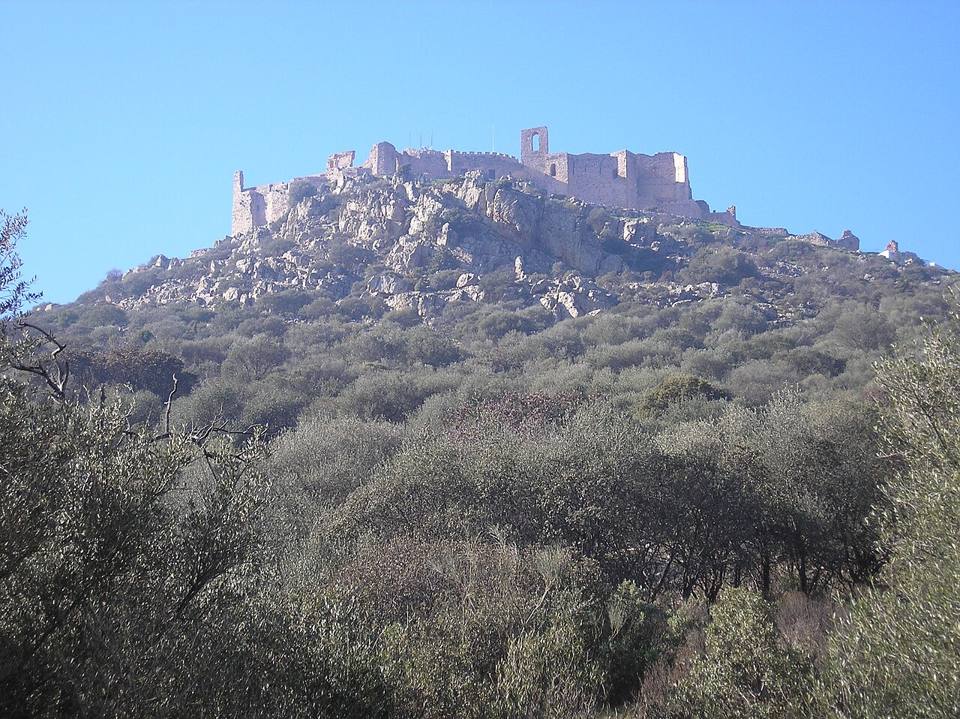
What the sources say about the building period
Built by the Order of Calatrava after the battle of Las Navas de Tolosa (1212); dated 1213 to 1217. MIT Libraries, Aga Khan Visual Archive Academic source
Stone and crew in numbers
- Country and type
- Spain, castle
- Stone in the walls
- 18,000 to 38,000 m³ Estimate
- For comparison
- about 11 Olympic pools of stone, or 2,800 truckloads
- Average crew
- about 837 workers (model value: the crew that would need exactly this long, working without a break)
Volume basis: site 28,590 m²; outer walls 1.6–1.8 m thick, 10–14 m high; three-aisle church; wall lengths assumed. Checked against measurements. Our estimates come from published dimensions and are shown as a range. The result is a simple model, not a measured fact.
Where the stone came from
The convent walls are quartzite rubble masonry. Volcanic stone was used for the gate, the cloister vaults and the rose window. The sources do not say where the stone was quarried. Junta de Castilla-La Mancha: Sacro Convento y Castillo de Calatrava la Nueva, Spain.info: Castillo de Calatrava la Nueva Official source
Legend: tradition, not evidence
Muslim prisoners captured in the campaign of Las Navas de Tolosa are said to have built the castle-convent.
What we know: The Order of Calatrava built it from 1213 to 1217, after the battle of 1212. We found the prisoner story only in a tourist guide, not in a primary source.
Fascinating Spain: Calatrava la Nueva, Geocaching: Sacro Convento Local lore, thin source
Build it yourself
Change the crew, the stone supply and the size, and see how long your own version of Calatrava la Nueva would take.
Open the calculator with Calatrava la Nueva
More castles
- Miravet Castle (Spain)
- Peñíscola Castle (Spain)
- Krak des Chevaliers (Syria)
- Margat Castle (Syria)