Historical Builder › Castles › Krak des Chevaliers
How Long Did It Take to Build Krak des Chevaliers?
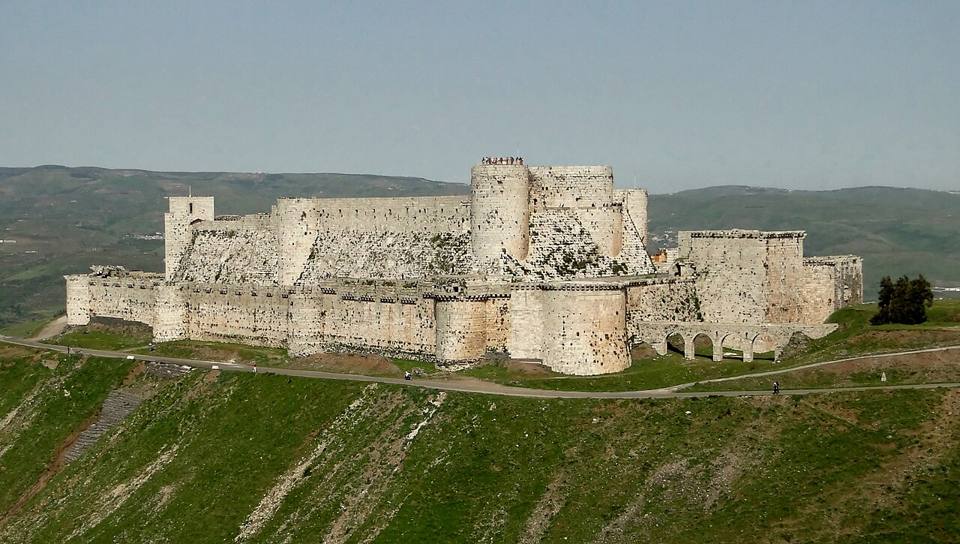
Short answer: about 129 years, from 1142 to 1271.
The mighty Krak is said to have surrendered in 1271 because of a forged letter telling the garrison to give up.
What the sources say about the building period
Built by the Hospitallers 1142–1271; further Mamluk construction in the late 13th century. UNESCO text via Smarthistory Secondary source
Stone and crew in numbers
- Country and type
- Syria, castle
- Stone in the walls
- 55,000 to 95,000 m³ Estimate
- For comparison
- about 30 Olympic pools of stone, or 7,500 truckloads
- Average crew
- about 70 workers (model value: the crew that would need exactly this long, working without a break)
Volume basis: 2.5 ha site; outer wall 3 m thick; towers 8–10 m thick. Checked against measurements. Our estimates come from published dimensions and are shown as a range. The result is a simple model, not a measured fact.
Where the stone came from
Limestone, probably with basalt, gathered from quarries near the castle. We found no excavation report naming the quarries. Wikipedia: Krak des Chevaliers, History Skills: Krak des Chevaliers Secondary, provisional
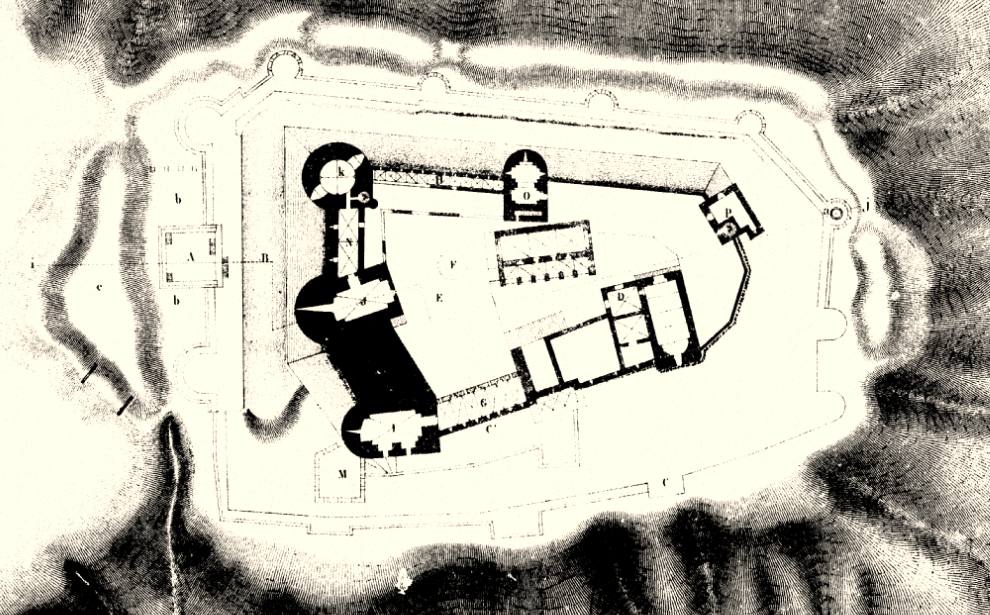
Plan
Legend: tradition, not evidence
Krak did not fall to force but to a forged letter that told the garrison to surrender.
What we know: Mamluk troops first stormed the outer ward. Two Muslim chroniclers report the forged letter. Accounts disagree on whose name it carried: the Grand Master of the Hospitallers or the Count of Tripoli.
HistoryNet, French Ministry of Culture: siege of 1271 Reported by chroniclers
Build it yourself
Change the crew, the stone supply and the size, and see how long your own version of Krak des Chevaliers would take.
Open the calculator with Krak des Chevaliers
More castles
- Margat Castle (Syria)
- Kerak Castle (Jordan)
- Beaufort Castle (Lebanon)
- Château Pèlerin (Atlit) (Israel)