Historical Builder › Castles › Château Pèlerin (Atlit)
How Long Did It Take to Build Château Pèlerin (Atlit)?
Short answer: about 2 years, from 1218 to 1220. This period is our own estimate of the main building phase; the sources do not give one clear start and end.
Pilgrims are said to have helped build it, hence the name Pilgrim's Castle. It was never taken in a siege.
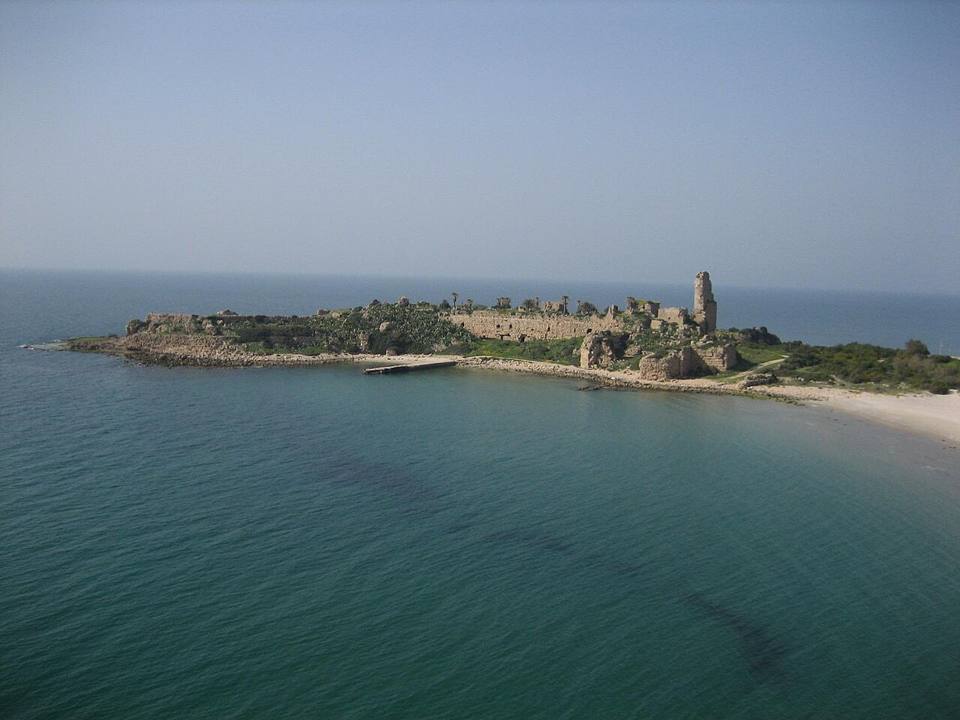
What the sources say about the building period
Construction began 1217–18 (Templars with pilgrims); sieges 1220 and 1265; abandoned 1291. Wikipedia Secondary source
Stone and crew in numbers
- Country and type
- Israel, castle
- Stone in the walls
- 50,000 to 90,000 m³ Estimate
- For comparison
- about 28 Olympic pools of stone, or 7,000 truckloads
- Average crew
- about 4,186 workers (model value: the crew that would need exactly this long, working without a break)
Volume basis: outer wall 6–6.5 m thick, 15–16 m high; inner wall 12 m thick, over 30 m high; two towers 21 x 27 m; length of the cross walls assumed. Checked against measurements. Our estimates come from published dimensions and are shown as a range. The result is a simple model, not a measured fact.
Where the stone came from
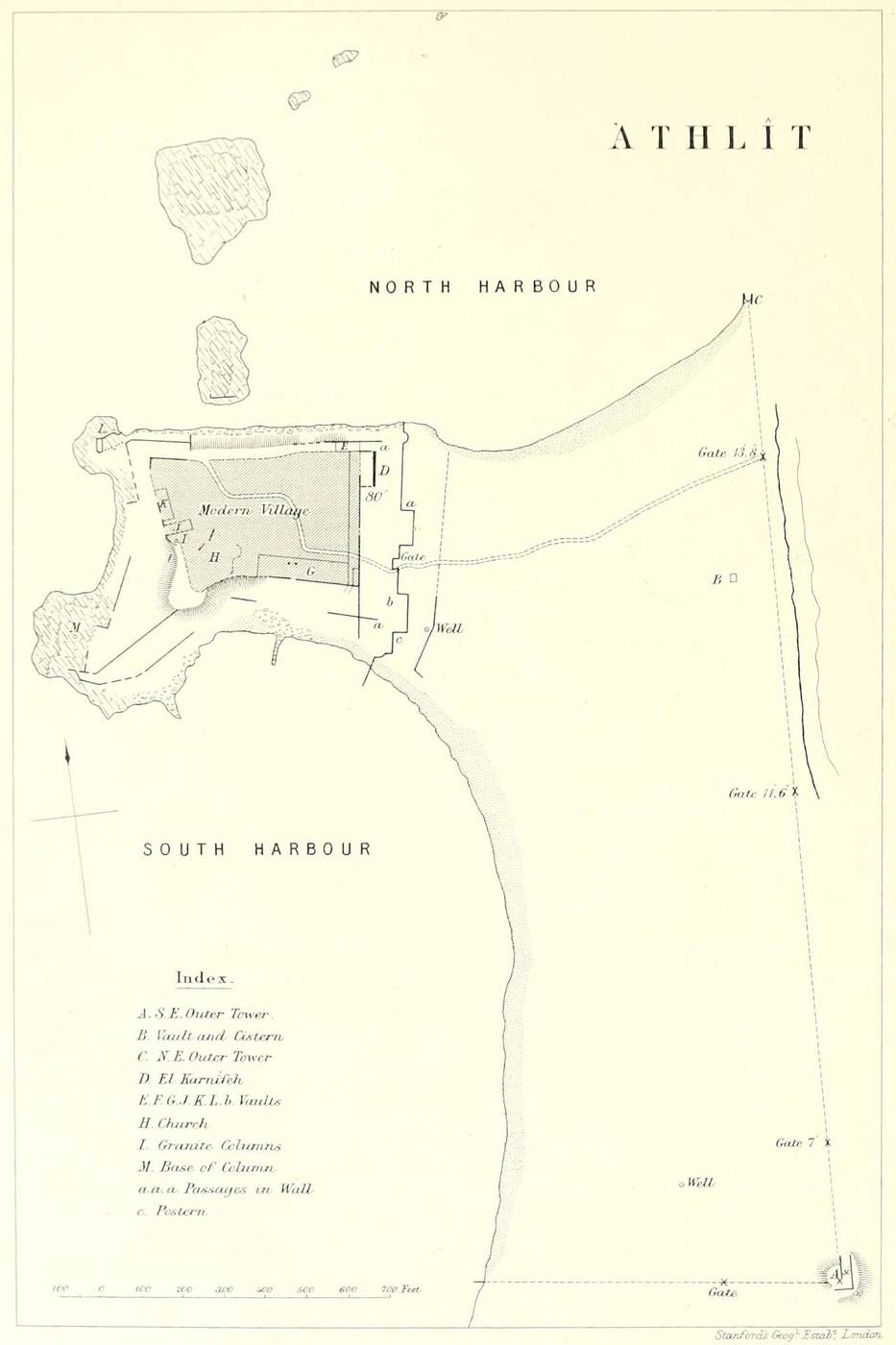
Quarried on the spot. The builders cut stone at several places along the Atlit ridge at once, which also created a 2.1 km rock-cut cliff as the eastern defense. Journal of Medieval Military History: The External Fortifications of Atlit Castle Academic source
Plan
Legend: tradition, not evidence
Pilgrims built the castle with their own hands, which is why it was called Pilgrim's Castle.
What we know: The Templars began the castle in 1218. Wikipedia says the name probably comes from pilgrims who volunteered their labor. The castle was never taken in a siege and was evacuated by sea in August 1291.
Wikipedia: Château Pèlerin Plausible tradition
Build it yourself
Change the crew, the stone supply and the size, and see how long your own version of Château Pèlerin (Atlit) would take.
Open the calculator with Château Pèlerin / Atlit
More castles
- Krak des Chevaliers (Syria)
- Margat Castle (Syria)
- Kerak Castle (Jordan)
- Beaufort Castle (Lebanon)